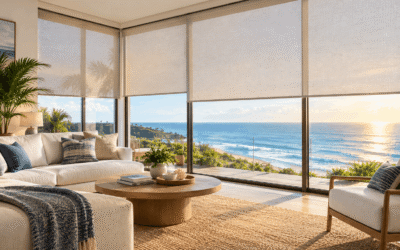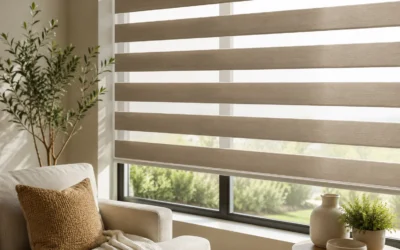
This guide covers what UV exposure actually does to a home, how different window treatments perform against it, and how to choose the right combination for a coastal property that gets more sun than most.
Why UV Damage Is a Bigger Issue on the Gulf Coast
Every part of the country deals with some UV exposure, but a handful of factors make it a more constant problem here specifically.
Gulf Coast homes tend to have larger windows than average, often designed intentionally to showcase water views. Many properties also sit with long, uninterrupted sun exposure across the day, especially west-facing and Gulf-facing rooms that catch strong afternoon light. On top of that, the number of clear, sunny days per year along the coast is high compared to much of the country, which means there are simply more hours of direct UV exposure hitting your interior across a given year.
None of that shows up as an immediate problem. It shows up eighteen months later as a couch cushion that’s noticeably lighter than the one next to it, or a patch of hardwood floor that looks different from the section that’s always been under a rug.
What UV Rays Actually Do to Your Home
Sunlight coming through a window carries a mix of ultraviolet radiation, visible light, and infrared (heat) radiation. Each one causes a different kind of problem, and understanding the difference matters when you’re choosing a window treatment.
Ultraviolet radiation is the primary driver of fading. UV rays carry enough energy to break down the chemical bonds in dyes, fabrics, and finishes. Over time, this breaks down color pigments and material structure at a molecular level, which is why fading is permanent rather than something that can be cleaned or reversed. Research on interior fading consistently points to UV exposure as responsible for a large share of it, commonly cited at up to 40 percent of total fading damage, with the rest coming from a mix of visible light, heat, and general wear.
Visible light is what causes glare and general brightness, and while it plays a smaller role in fading than UV, it still contributes over time, especially with prolonged exposure.
Infrared radiation is what makes a sunlit room feel hot. It doesn’t fade materials directly the way UV does, but the heat it generates accelerates wear on fabrics, wood, and finishes, and it’s the main reason a sun-exposed room needs more air conditioning to stay comfortable.
The practical takeaway: a good UV-resistant window treatment needs to address more than just brightness. It has to filter out the invisible wavelength that’s actually causing the long-term damage, not just dim the room.
How Window Treatments Are Rated for UV Protection
Not all window treatments block UV equally, and manufacturers typically describe performance using a couple of specific measurements.
UV protection percentage is the most direct number, describing what portion of UV rays a fabric or material blocks. Many solar shades and cellular shades are rated between 90 and 99 percent UV blockage, depending on the fabric and how tightly it’s woven.
Openness factor applies specifically to solar shade fabrics and describes how much of the fabric is actual weave versus open space you can see through. A lower openness factor (for example, 1 to 3 percent) means a tighter weave that blocks more UV and light, while a higher openness factor (10 percent or more) lets in more visibility and light at the cost of somewhat lower UV blockage.
UPF rating, borrowed from the same scale used for sun-protective clothing, occasionally appears on window treatment fabrics as another way to describe UV blockage, with UPF 50+ representing the highest tier of protection.
Some manufacturers also carry independent certifications through organizations like the Attachments Energy Rating Council, which publish tested data on both UV blockage and solar heat gain rather than relying on marketing claims alone. Looking for one of these ratings is the most reliable way to compare products honestly rather than guessing based on how a fabric looks or feels.
Product-by-Product Breakdown
Solar Shades Solar shades
Solar Shades Solar shades are one of the most purpose-built options for UV protection. Made from a tightly woven mesh fabric, they’re specifically engineered to filter UV and reduce heat gain while still allowing a view through the shade, which makes them a favorite for rooms with a water view worth preserving. Depending on the openness factor and backing, solar shades commonly block somewhere in the 90 to 99 percent range of UV rays. Metallized or dual-layer versions, which pair a sheer solar fabric with a denser backing, push UV and heat blockage even higher while still allowing some daytime visibility.
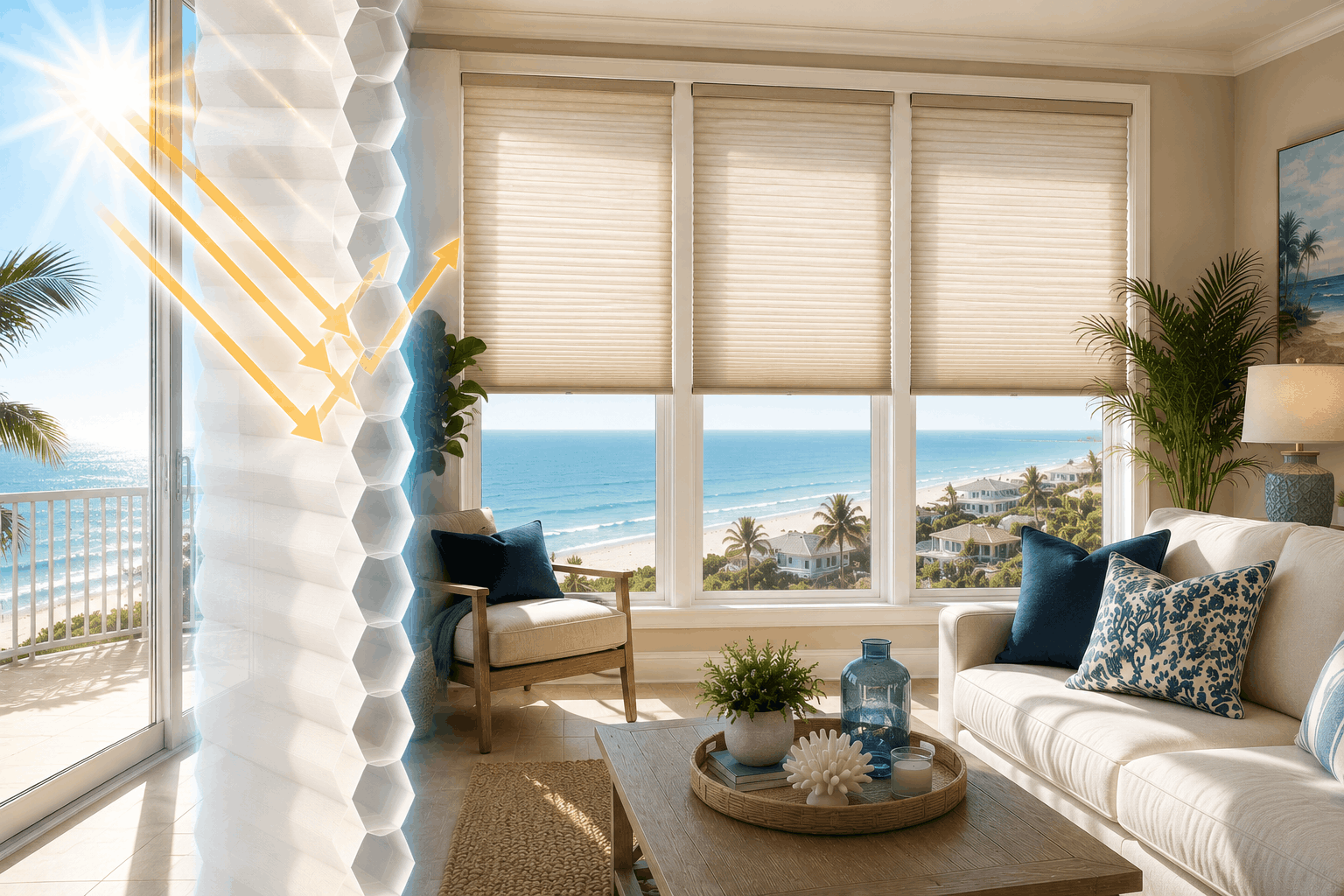
Cellular (Honeycomb) Shades
Beyond their well-known energy efficiency benefits, cellular shades also block a very high percentage of UV rays, commonly cited near 99 percent depending on fabric density. Because the honeycomb structure already uses tightly woven fabric layers to trap air for insulation, that same density does double duty by filtering out most UV before it ever reaches the room.
Blinds
Aluminum and vinyl blinds with reflective coatings can bounce a meaningful share of UV rays back outside when closed, sometimes cited as high as 90 percent, but performance depends heavily on how tightly the slats overlap and how well the blind fits the window frame. Gaps at the edges or between slats let UV through even when the blind looks closed, so fit matters as much as material here.
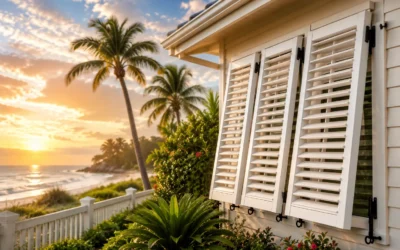
Plantation Shutters:
Solid shutter panels block UV effectively when closed, since there’s no fabric weave to filter through, just a solid barrier. The tradeoff is that full UV protection generally means fully closing the shutters, which sacrifices the view and natural light solar shades are designed to preserve.
Drapery
Lined drapery, especially with a UV-resistant or blackout lining, can block a high percentage of UV when closed, but sheer or unlined drapery offers only modest protection on its own. For rooms where drapery is chosen primarily for style, pairing it with a solar shade or cellular shade underneath gives you both the look and the actual protection.
Window Film
Though not a window treatment in the traditional sense, UV-blocking window film deserves a mention since it’s sometimes used alongside blinds or shades rather than instead of them. Applied directly to the glass, quality UV film can filter out up to 99 percent of UV rays without changing the appearance of the window or requiring the treatment to be closed at all. It’s a useful baseline layer of protection for rooms with large, fixed windows where a fabric treatment alone isn’t providing full-day coverage.
Solar Shade Fabric: Fiberglass, Polyester, and PVC-Coated Weaves
Not all solar shade fabric is built the same way, and the base material affects both UV performance and how the fabric holds up in a coastal climate specifically.
Fiberglass-core weaves are common in higher-end solar shades and tend to hold their shape well over time, resisting the sagging or stretching that can happen with lower-quality fabrics after years of heat exposure. Fiberglass doesn’t absorb moisture the way some fabrics do, which is a genuine advantage in a humid coastal environment.
PVC-coated polyester weaves are widely used and generally more affordable, offering strong UV resistance and decent durability, though quality varies significantly between manufacturers. Cheaper PVC-coated fabrics can become brittle over time with constant heat and sun exposure, which is worth asking about directly when comparing lower-cost options.
Solution-dyed acrylic and polyester fabrics (more common in drapery and some roller shade fabrics) have color woven into the fiber itself rather than applied as a surface dye, which makes them meaningfully more fade-resistant than fabrics that are simply printed or surface-dyed. For fabric treatments layered with a solar shade, choosing a solution-dyed option adds another layer of longevity.
The practical guidance: when comparing solar shades that look similar on a sample card, ask specifically about the base fabric construction and expected lifespan in high-sun, high-humidity conditions, since two shades with a similar UV percentage on paper can perform very differently after five years on a west-facing Gulf window.
Does Color Affect UV Protection?
Fabric color plays a role in UV and heat performance, though it works a little differently than most people expect.
Darker solar shade fabrics tend to offer slightly better UV absorption and a clearer view through the shade during the day, since less light passes through in both directions. The tradeoff is that darker fabrics also absorb more heat, which can make the fabric itself run warmer, particularly right at the window.
Lighter solar shade fabrics reflect more solar energy before it’s absorbed, which helps with heat rejection, but they can create more glare and a slightly whiter, less transparent view during bright daylight hours.
Neither option is universally “better.” For a Gulf-facing room where heat gain is the bigger concern, a lighter fabric with reflective backing often makes more sense. For a room where daytime privacy and view clarity matter more than heat, a darker fabric may be the better fit. This is one more reason a room-by-room approach works better than choosing a single fabric for the whole house.
Living rooms and great rooms with a water view.
These rooms usually have the largest windows, the most valuable furniture, and the strongest incentive to keep the view unobstructed during the day. Solar shades with a low to moderate openness factor are typically the best fit, since they filter UV and heat while preserving visibility. Pairing them with UV-resistant window film adds a layer of baseline protection even when the shade is raised.
Bedrooms.
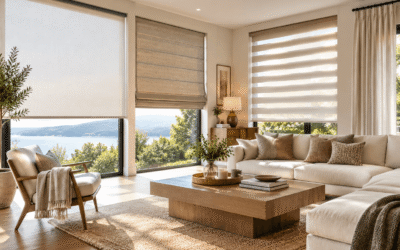
Full UV and light control matters more here, both for sleep quality and because bedroom furniture (particularly upholstered headboards and wood furniture) is just as susceptible to fading as anything in the living room. Cellular shades with blackout fabric, or a dual shade combining sheer and blackout layers, give strong protection along with full darkening when needed.
Kitchens and dining areas.
These rooms often get intense afternoon light and typically don’t need full blackout, making light-filtering cellular shades or a moderate-openness solar shade a practical middle ground.
Home offices and rooms with electronics or artwork.
Screens, artwork, and photographs are especially vulnerable to UV fading and don’t always get the same attention as furniture. A higher level of UV blockage, even at the cost of some natural light, is usually the right tradeoff in these spaces.
Sunrooms and enclosed porches.
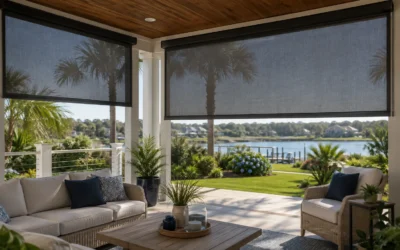
These spaces are often glass on multiple sides, which multiplies UV exposure compared to a standard room. Solar shades with a lower openness factor, sometimes combined with UV window film on fixed glass panels, tend to be necessary rather than optional in these rooms.
Motorization and Automated Sun Control
One of the more overlooked advantages of motorized shades is how well they pair with UV protection specifically. A room’s sun exposure changes throughout the day, and a shade that’s manually adjusted tends to stay in whatever position it was last left, which means it’s often not providing protection during the exact hours it’s needed most.
Motorized solar or cellular shades can be scheduled to lower automatically during peak sun hours and raise again later in the day, giving consistent protection without requiring anyone to remember to adjust them. Some systems can also be paired with light or temperature sensors, adjusting automatically based on real conditions rather than a fixed schedule. For vacation rentals in particular, this removes the guesswork entirely, since guests are unlikely to manage manual shades with any real UV protection in mind.
What This Means for Furniture, Flooring, and Everything In Between
The financial case for UV-resistant window treatments becomes clearer once you think through what’s actually sitting in a sun-exposed room. Upholstered furniture, area rugs, hardwood and vinyl flooring, artwork, photographs, and even electronics with plastic housings are all vulnerable to some degree of UV-related fading or degradation over time.
None of this happens overnight, which is part of why it’s easy to underestimate. A room that gets strong afternoon sun for a few hours a day, every day, for a few years, can show visibly different coloration between furniture that’s shielded and furniture that isn’t, even within the same piece. Replacing faded furniture or refinishing a damaged floor costs considerably more than the window treatment that would have prevented it in the first place.
A few specific examples worth knowing about, since they’re the most common complaints homeowners bring up after the damage is already done:
Hardwood and luxury vinyl flooring. UV exposure can cause visible color shifts in wood flooring, sometimes creating a noticeably different shade in the sun-exposed strip along a window compared to the rest of the room. Refinishing an entire floor to correct an uneven patch is a far bigger project than most homeowners expect.
Leather and upholstered furniture. Leather is especially prone to UV damage, often showing cracking and stiffness in addition to fading, since UV breaks down the natural oils that keep leather flexible. Fabric upholstery fades more predictably but can also weaken structurally over years of exposure, leading to premature wear in the exact spot that gets the most sun.
Area rugs. A rug positioned even partially in a sunbeam often shows a visible line between the faded and protected sections within a year or two, which is one of the fastest and most visually obvious signs of UV damage in a home.
Artwork and photographs. Original artwork, prints, and framed photographs are particularly vulnerable, since even UV-resistant glass in a frame only protects against light coming from directly in front, not necessarily the angled sun exposure many rooms actually get throughout the day.
For rental properties specifically, this list matters even more, since furniture and flooring in a short-term rental gets far more cumulative sun exposure per year than the same items would in a primary residence used only evenings and weekends.
Maintenance and Longevity
UV-resistant fabrics used in solar and cellular shades are generally engineered to be fade-resistant themselves, since a shade fading long before the furniture it’s protecting would defeat the purpose. Most quality products with UV inhibitors are built to perform for eight to ten years or more with normal use. A few habits extend that lifespan further:
- Dust shades regularly with a soft brush attachment, since accumulated dust and grit can create tiny abrasions on the fabric surface over time
- Avoid harsh chemical cleaners on fabric shades, which can break down UV-resistant coatings faster than sunlight alone
- In rooms with especially intense, one-directional sun exposure, consider rotating or replacing shades before they show heavy wear, rather than waiting until they’re visibly faded
- If using window film alongside a fabric treatment, confirm the film is professionally applied, since poor application can lead to bubbling or peeling that reduces its effectiveness
Common Questions About UV-Resistant Window Treatments
| Question | Answer |
|---|---|
| Do I need to close my shades completely to get UV protection? | No, not with solar or cellular shades. Unlike shutters or drapery, which rely on a solid closed barrier, solar and cellular shade fabrics filter UV continuously whether the shade is fully lowered or partially raised, since the protection comes from the fabric itself rather than complete coverage. |
| Can I get UV protection without losing my view? | Yes. This is the specific problem solar shades are designed to solve. A low to moderate openness factor lets you keep a usable view through the shade while still filtering out the majority of UV rays passing through. |
| Is tinted window film a substitute for shades or blinds? | It can serve as a strong baseline layer, especially on fixed glass that doesn't have a treatment, but most homeowners use it alongside shades or blinds rather than instead of them, since film alone doesn't provide the light control, privacy, or style options a fabric treatment does. |
| Will UV-resistant shades eventually fade themselves? | Quality fabrics with UV inhibitors are engineered specifically to resist this and typically hold up well for eight to ten years or more. Lower-quality fabrics without UV-stabilized dyes or coatings can fade noticeably faster, which is worth asking about directly when comparing options. |
| Does tinted glass already handle this, or do I still need a window treatment? | Tinted or low-E glass does block some UV on its own, but it's rarely a complete solution by itself, especially on older windows or homes without upgraded glass throughout. A window treatment adds a second, more easily upgraded layer of protection on top of whatever the glass itself provides. |
Getting the Right Combination for Your Home
There’s rarely a single “best” UV-resistant window treatment for an entire house. The right answer depends on how much sun each room gets, what’s inside it, and how much you’re willing to trade visibility or brightness for protection. A Gulf-facing living room with an expensive sectional and a water view calls for a very different solution than a home office with a desk and a bookshelf against an east-facing wall.
A free in-home consultation is the most reliable way to sort this out room by room, since it accounts for the direction each window faces, how many hours of direct sun it gets, and what’s actually at risk of fading inside. Getting the combination right the first time, rather than guessing and adjusting later, is usually the difference between a window treatment that quietly does its job for a decade and one that ends up needing an early replacement.
Why Window Treatments Matter More Than You Think in Coastal Homes:Think window treatments are just a finishing touch? Along the Gulf Coast, they’re doing far more work than most homeowners realize, from cutting sun damage to easing the load on your air conditioning. Learn why the right choice matters more here than almost anywhere else.