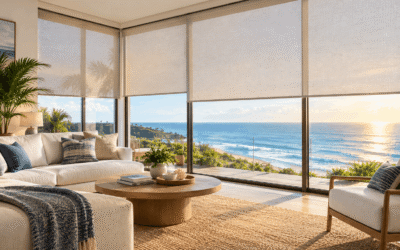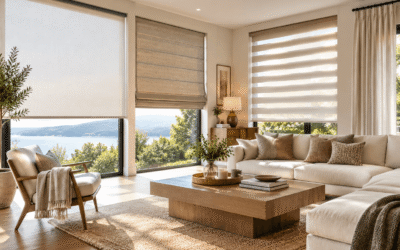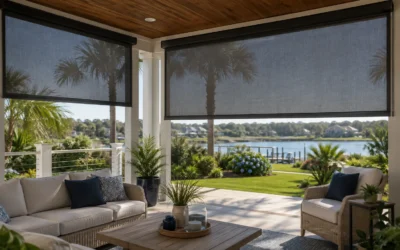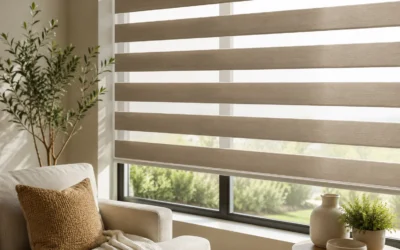
This guide breaks down how cellular shades work, why they matter more in a coastal climate than almost anywhere else, and how to choose the right version for your home.
Why Windows Are the Weak Point in Gulf Coast Homes>
Windows are consistently the least insulated part of any home. Standard double-pane glass has very little resistance to heat transfer compared to an insulated wall, which means glass acts almost like an open door for both heat and cold, depending on the season. In most homes, windows are responsible for a substantial share of total energy loss, and in a Gulf Coast climate, that loss runs almost entirely in one direction: heat pouring in.
Homes here deal with long, intense summers, strong direct sun on Gulf-facing and west-facing rooms, and high humidity that makes air conditioning work harder just to keep a space feeling dry and comfortable. Add in oversized windows designed to showcase water views, and you end up with a lot of unprotected glass working against your energy bill for most of the year.
This is exactly the gap cellular shades are designed to close.
How Cellular Shades Actually Work
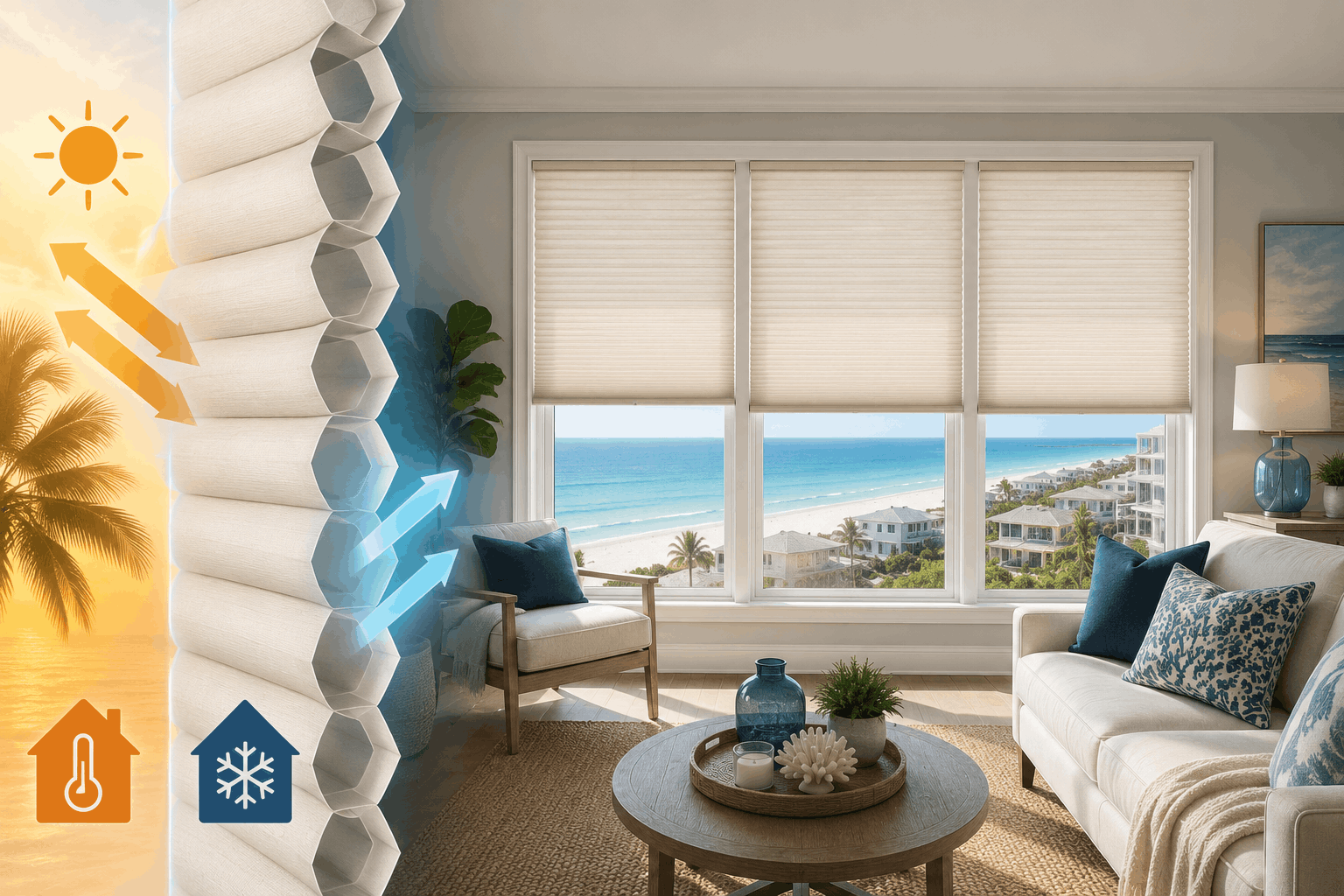
Cellular shades get their name from their structure: a fabric shade folded into a series of hexagonal cells that look like a honeycomb when you view them from the side. Each cell traps a pocket of still air between the window glass and the room.
Still air is one of the best natural insulators available, which is why the honeycomb design matters so much. Instead of a single flat layer of fabric between you and the window (like a roller shade), a cellular shade creates multiple insulating air pockets stacked in a row. The more cells in the design, the more insulating layers you get.
This is measured using a metric called R-value, which describes a material’s resistance to heat flow. A higher R-value means better insulation. For context:
- A single pane of glass has an R-value of roughly 1
- Standard double-pane glass sits around R-1.8 to R-2
- Single-cell cellular shades typically add an R-value in the 3.5 to 4.3 range
- Double-cell and triple-cell cellular shades can push the combined R-value up to around 4.8 to 5.0
In plain terms, adding a well-fitted cellular shade to a standard window roughly doubles or triples its resistance to heat transfer. That’s a meaningful upgrade for a part of the house that’s otherwise doing very little insulating work on its own.
The Real-World Energy Numbers
The insulating effect of cellular shades isn’t just a marketing claim, it’s been studied extensively, including research referenced by the U.S. Department of Energy. The general findings hold up across most sources:
- Tightly installed cellular shades can reduce heat loss through windows by 40% or more during heating season
- In cooling season, cellular shades can reduce unwanted solar heat gain through windows by up to 80% when installed with a tight, well-sealed fit
- Combined, this typically translates into double-digit percentage savings on the heating and cooling portion of a home’s energy bill, with the exact number depending on window size, orientation, and how consistently the shades are used
For a Gulf Coast home where cooling costs dominate the energy bill for eight or nine months of the year, the summer solar heat gain reduction is the number that matters most. A home with large, sun-exposed windows facing the water or afternoon sun stands to see the biggest impact, since those are exactly the windows losing the most energy right now.
Fit Matters as Much as the Shade Itself
One detail that gets overlooked constantly: a cellular shade only performs at its rated R-value when it’s installed tightly. Gaps around the edges let air bypass the honeycomb structure entirely, which undermines the insulating effect no matter how good the fabric is.
This is where custom measuring and professional installation make a real difference over off-the-shelf options. An inside-mounted shade that fits snugly against the window frame, sometimes with side channels to seal the edges, performs meaningfully better than a shade that’s slightly too small or hung loosely. If you’re investing in cellular shades specifically for energy performance, the installation quality is not a minor detail, it’s a large part of what you’re paying for.
Single Cell vs. Double Cell vs. Triple Cell
Single-cell shades have one row of honeycomb pockets. They’re thinner, more affordable, and still provide a solid insulation boost over bare glass, making them a reasonable choice for secondary rooms, closets, or budget-conscious rental properties.
Double-cell shades have two stacked rows of cells, which roughly doubles the number of insulating air pockets. This is the most common choice for primary living spaces, since it balances strong energy performance with a manageable price point and a moderate shade profile at the top of the window.
Triple-cell shades take this further with three rows of cells, delivering the highest R-value of the three options. They’re bulkier and cost more, but for rooms with the most extreme sun exposure, like a Gulf-facing living room with floor-to-ceiling glass, the added performance can be worth the investment.
For most Gulf Coast homes, double-cell shades hit the sweet spot between cost and performance. Triple-cell is worth considering specifically for the sunniest, largest windows in the house rather than throughout the whole home.
Light Filtering vs. Blackout Fabric
Beyond cell structure, cellular shades also come in different fabric opacities, and this affects both light control and energy performance.
Light filtering fabric softens direct sunlight while still allowing natural light into the room. This is the more popular option for living rooms, kitchens, and dining areas where you want brightness without harsh glare or fading.
Blackout fabric blocks light almost entirely, which makes it a strong choice for bedrooms, media rooms, or any space where you want full darkness and maximum privacy. Blackout cellular shades also tend to add a bit more solar heat rejection than light filtering versions, simply because the denser fabric blocks more radiant heat from passing through.
Many homeowners end up mixing both, using blackout in bedrooms and light filtering in shared living spaces, which lets each room’s shade match how it’s actually used.
How Cellular Shades Compare to Other Window Treatments
It helps to see where cellular shades actually land next to the other options homeowners typically consider.
| Window Treatment | How It Compares to Cellular Shades |
|---|---|
| Blinds | Aluminum and faux wood blinds are affordable and easy to adjust, but they insulate poorly by comparison. Because a blind is made of solid slats with visible gaps between them, it doesn't create the sealed air pocket a cellular shade does. Blinds also tend to conduct heat rather than block it, especially aluminum, which can actually radiate absorbed heat back into the room. |
| Roller Shades | A roller shade is a single flat layer of fabric, which controls light and glare reasonably well but offers minimal insulating value on its own. Some roller shades are marketed as "solar" or "energy efficient," and they do help with glare and some heat rejection, but they don't come close to matching the R-value of a honeycomb structure with multiple trapped air layers. |
| Plantation Shutters | Shutters are excellent for durability, light control, and resale value, and their solid panels do provide some insulating benefit, particularly when closed tightly. But shutters aren't airtight the way a honeycomb cell is, and they don't trap a dedicated layer of still air the way cellular shades do. Many coastal homeowners use both: shutters for style and durability on primary living areas, cellular shades where energy performance is the top priority, such as bedrooms and Gulf-facing rooms with the most sun exposure. |
| Drapery | Heavy, lined drapery can offer a meaningful insulating boost, especially when paired with a shade underneath, but on its own it depends heavily on fabric weight and how tightly it's hung. Cellular shades give you a more consistent, engineered result without needing a heavy fabric that may feel out of place in a bright coastal interior. |
The short version: almost every other window treatment can help a little with heat and energy loss, but cellular shades are the only category built specifically around maximizing that effect through trapped air, which is why they consistently test as the most energy-efficient option available.
Top-Down Bottom-Up Cellular Shades
One variation worth calling out specifically for Gulf Coast homes is the top-down bottom-up cellular shade. Instead of only lowering from the top like a standard shade, this style can be raised from the bottom, lowered from the top, or adjusted to any combination in between.
This matters most in condos and homes where privacy and view are both priorities at the same time. A ground-floor condo facing a walkway, or a unit with balconies close to a neighboring building, can keep the bottom half covered for privacy while leaving the top open for light and a water view. It’s a small mechanical difference, but it solves a genuinely common problem along the coast, where a lot of housing is close enough to neighbors or public areas that full coverage feels necessary even during the day.
Top-down bottom-up shades are available in the same single, double, and triple-cell configurations, so you don’t have to trade energy performance to get the added flexibility.
While energy efficiency is the headline benefit, cellular shades solve a few other problems that matter specifically in a coastal setting.
- UV protection. Constant Gulf sun fades furniture, flooring, and artwork faster than most homeowners expect. Cellular shades block a significant portion of UV rays, which helps protect interior finishes over time, not just your energy bill.
- Noise reduction. The layered fabric structure absorbs some sound, which can help in condos near busy roads, marinas, or shared walls in multi-unit buildings.
- Consistent temperature across rooms. Homes with a lot of west-facing or water-facing glass often deal with certain rooms running hotter than the rest of the house. Cellular shades on the worst-offending windows can help even out the temperature difference room to room, reducing the strain on any one part of the HVAC system.
- Privacy without losing light. Light filtering cellular shades let you maintain privacy from neighboring condos or street-facing rooms while still keeping a room from feeling closed off during the day.
Choosing the Right Setup for Your Space
Gulf-front condos and homes with large water-facing windows: These get the most direct, sustained sun exposure. Double-cell or triple-cell shades with light filtering or blackout fabric, paired with a tight inside mount, will deliver the most noticeable difference in both comfort and energy use.
Bedrooms: Blackout double-cell shades are the most common choice, combining strong insulation with full light control for better sleep.
Living rooms and shared spaces: Light filtering double-cell shades tend to be the best balance, keeping the room bright while still cutting heat and glare.
Rental properties and secondary rooms: Single-cell shades offer a solid upgrade over standard blinds at a lower cost, which makes sense for spaces where maximum performance isn’t the top priority.
Hard-to-reach or oversized windows: Motorized cellular shades solve the practical problem of operating a shade on a tall window while still delivering full energy performance, and they’ve become significantly more affordable and easier to integrate with smart home systems in recent years.
Colors, Textures, and Style Considerations
Energy performance aside, cellular shades have come a long way from the plain white or off-white options most people picture. Fabric options now range from crisp neutrals and soft linens to deeper tones and subtle textures, which makes it easier to match a shade to a coastal color palette without sacrificing function.
Lighter colors tend to reflect more solar heat before it even reaches the fabric, which gives them a slight energy advantage on the most sun-exposed windows. Darker colors can absorb more heat into the fabric itself, though the honeycomb structure still limits how much of that heat transfers into the room. For rooms with the most intense afternoon sun, sticking to lighter or mid-tone colors is a small way to add a bit more performance on top of the cell structure itself.
Texture also plays a role in how a shade reads in a room. A smooth, tightly woven fabric gives a cleaner, more modern look, while a slightly textured weave can soften a space and pair well with natural materials like woven wood shades or wood-look shutters elsewhere in the home. Since cellular shades are often installed throughout multiple rooms in a house, most homeowners land on one or two coordinating colors rather than treating every room as a separate decision, which keeps the home feeling cohesive from room to room.
Maintenance in a Humid Climate
Cellular shades are generally low maintenance, but coastal humidity is worth factoring in. Fabric shades near frequently opened windows or balcony doors can pick up more airborne moisture and salt residue than shades further from the coastline. A light vacuuming with a brush attachment every few weeks, along with occasional spot cleaning, keeps most cellular shades looking and performing well for years. Avoiding harsh cleaners on the fabric and keeping shades raised slightly during heavy rain or storm conditions (if windows are ever left cracked) also helps protect the material over time.
It’s also worth checking shades a couple of times a year for any dust buildup inside the folds of the honeycomb cells themselves, since this is where debris tends to collect most and where a quick once-over with a vacuum brush attachment makes the biggest visible difference. In condos or homes that stay closed up for stretches between visits, such as second homes and rental properties, a light cleaning at each seasonal turnover is generally enough to keep shades performing well between deeper cleanings.
Are They Worth the Investment?
Cellular shades typically cost more upfront than basic blinds, but the calculation looks different once you factor in what they’re actually replacing. A well-fitted cellular shade functions as both a window treatment and a meaningful energy upgrade, something a standard blind or roller shade simply can’t claim in the same way. For Gulf Coast homeowners running air conditioning for the majority of the year, the reduction in solar heat gain during peak summer months is often the fastest place to see a return, both in comfort and on the utility bill.
The bigger the window, the more direct sun it gets, and the more hours a day it’s exposed, the stronger the case for cellular shades over a less insulating alternative. It’s also worth thinking about the investment room by room rather than all at once. Many homeowners start with the two or three windows getting the most direct sun (typically Gulf-facing living rooms and primary bedrooms) and expand from there, which spreads out the cost while still targeting the windows doing the most energy damage first.
For rental properties, there’s an added angle worth considering: a home that stays noticeably cooler and more comfortable during peak summer bookings tends to generate fewer guest complaints about temperature and higher marks in reviews, which is a less obvious but real return on the same upgrade.
A Word on Getting the Measurements Right
Because performance depends so heavily on fit, this is one product where a professional in-home measurement genuinely changes the outcome. Windows in older coastal homes and condos aren’t always perfectly square, and a shade that’s even slightly undersized won’t deliver the insulating benefit you’re paying for. A proper consultation accounts for the exact window dimensions, mount type, and sun exposure of each room, so the final product performs the way it’s supposed to rather than just looking the part.
If you’re considering cellular shades for your Gulf Coast home, a free in-home consultation is the best way to figure out which cell structure, fabric type, and mount option makes sense room by room, based on how much sun each window actually gets and how the space is used day to day.
Natural Light Without the Heat: Smart Window Coverings for Beach Homes:Wondering how to keep a room bright without letting in the heat that drives up your cooling bill? Learn which window coverings filter solar heat while still letting natural light through, and how the right fabric and structure make the difference between a comfortable room and a hot one.