Most window treatment decisions come down to comfort, privacy, or style. Exterior shutters are one of the rare products where the decision also touches something more serious: how your home holds up when a storm rolls in off the Gulf. That dual purpose, real curb appeal paired with real storm protection, is exactly why exterior plantation-style shutters have become such a popular investment for homeowners along the Alabama and Florida coastline.
This guide covers the two main styles of exterior shutters used for storm protection, how they actually perform in a hurricane, and how to choose the right option for your home’s architecture and location.
Bahama Shutters vs. Colonial Shutters
Exterior shutters built for storm protection generally fall into two categories, and the difference between them is both visual and functional.
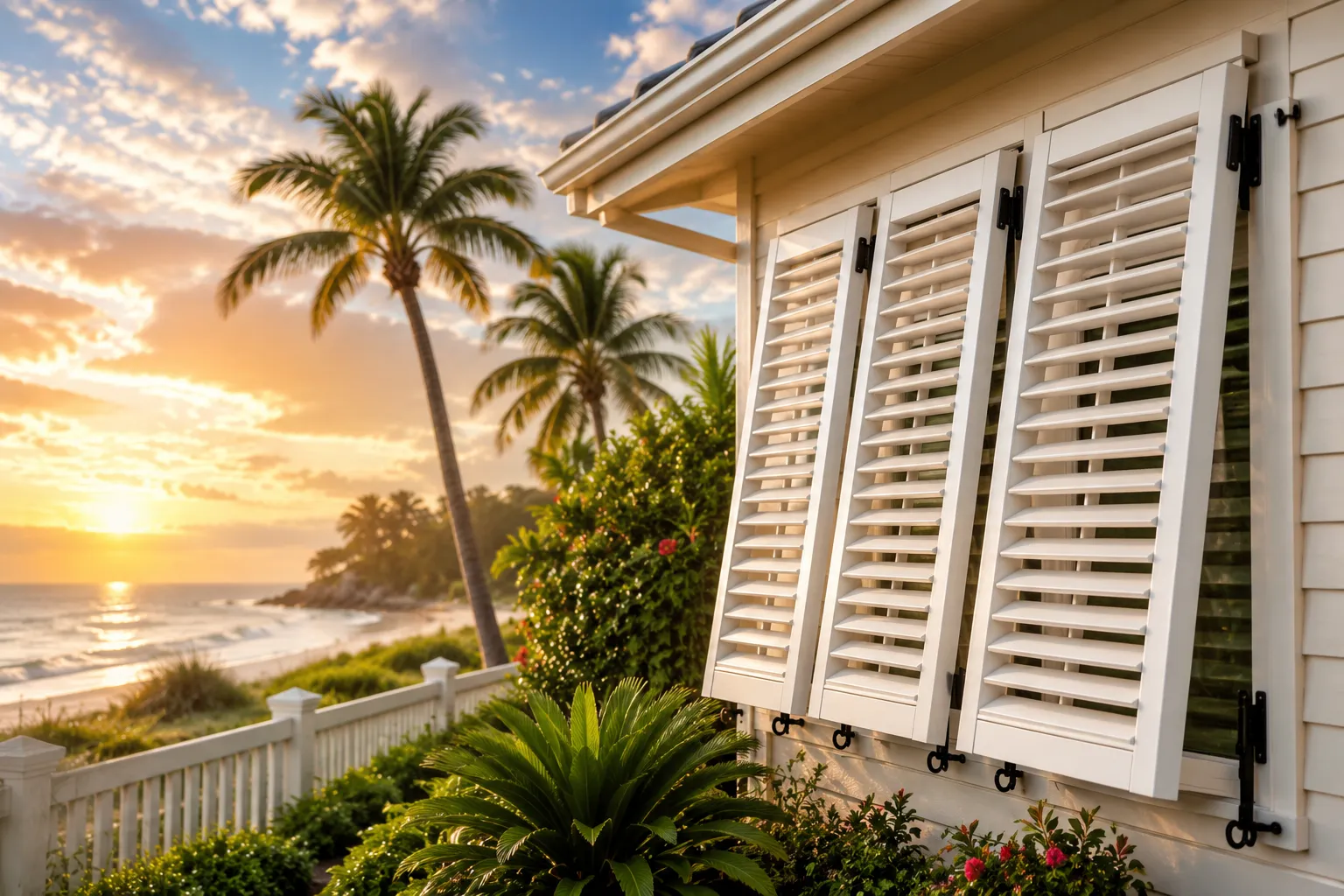
Bahama shutters are hinged at the top of the window and prop outward at an angle, functioning like a small awning over the glass during normal use. This design provides shade, encourages airflow, and gives the home a distinctly tropical, Caribbean-inspired look that pairs naturally with coastal architecture. When a storm approaches, the shutter releases from its prop, closes flat against the window, and locks into place, covering the entire opening.
Colonial shutters mount on either side of the window and swing inward to meet in the center, similar to a classic pair of louvered exterior shutters you’d see on a traditional home. They bring a more historic, formal look and suit Colonial, Cape Cod, and Mediterranean-style properties particularly well. Like Bahama shutters, they close and lock over the window when severe weather is expected.
Both styles are typically manufactured from extruded aluminum for hurricane-rated applications, engineered specifically to meet wind load and impact standards required by Florida and coastal Alabama building codes. Because both options stay permanently installed on the home year-round, storm prep becomes a matter of minutes rather than a scramble to install temporary panels before every named storm.
How Much Protection Do They Actually Provide?
This is the question that matters most, and the honest answer depends on the specific product and how it’s rated.
Not every exterior shutter marketed as a “storm shutter” or “hurricane shutter” is actually engineered to the same standard. Storm-rated shutters are tested and certified to withstand specific wind speeds and impact from wind-borne debris, based on the building codes for your location. These are genuine engineered systems, with reinforced hardware, tested attachment methods, and documented performance, not simply heavy-duty decorative panels that happen to look sturdy.
Decorative-only shutters, by contrast, may look identical from the street but aren’t built or tested to the same impact standards. They can still add value in terms of shade and curb appeal, but they shouldn’t be relied on as a home’s primary line of defense in a hurricane.
When shopping for storm protection specifically, it’s worth asking directly for product approval numbers and test certifications rather than assuming a shutter is storm-rated based on appearance or material alone. Material matters too: aluminum shutters engineered for impact resistance perform meaningfully better than wood or PVC alternatives, which offer more moderate protection and are better suited to homes outside the most active hurricane corridors.
Why the Top-Hinged Design Matters for Storm Prep
One detail that sets Bahama shutters apart operationally is that they’re already mounted in position over the window during normal use. When a storm approaches, deployment simply means releasing the prop, closing the shutter flat, and locking it, no ladder, no separate panels to retrieve from storage, no need to schedule an installation crew before every storm watch.
This matters more than it might seem. Homeowners who rely on removable storm panels or accordion shutters that need manual deployment sometimes find themselves racing the clock as a storm approaches, especially if a hurricane strengthens or shifts path with little warning. A shutter that’s already installed and simply needs to be closed removes that last-minute pressure entirely, which is a meaningful advantage for full-time residents, second-home owners who aren’t always on-site, and rental property managers responsible for multiple units at once.
Everyday Benefits Beyond Storm Season
Exterior shutters earn their keep well outside of hurricane season, which is part of what makes them a stronger long-term investment than storm protection alone would justify.
Shade and heat reduction. Bahama shutters in their normal, propped-open position create a permanent awning effect over the window, blocking direct sun while still allowing airflow and a degree of visibility through the louvers. This reduces solar heat gain on the window itself, which can meaningfully ease the load on a home’s air conditioning during peak summer months.
Ventilation. The angled, louvered design is specifically built to encourage cooling breezes to move through the home rather than blocking airflow entirely, a detail that traces back to the shutter style’s tropical origins, where they were used long before air conditioning existed as a way to manage heat naturally.
Privacy. In the closed or partially closed position, both Bahama and Colonial shutters obscure clear sightlines into the home from the street or a neighboring property, while still allowing some light and partial visibility through the louvers.
Curb appeal. This is where the investment pays off in a way that’s visible every single day, not just during storm season. Exterior shutters, especially in a color that complements the home’s exterior palette, add architectural character that’s difficult to replicate with any other single upgrade. Real estate agents and appraisers frequently point to exterior shutters as one of the more cost-effective curb appeal upgrades available, precisely because the same installation is doing double duty as both a design feature and a functional storm system.
Choosing the Right Style for Your Home’s Architecture
Bahama shutters lean tropical and coastal, and they tend to suit beach houses, Gulf-front condos, and homes with a casual, island-inspired aesthetic. Their angled, awning-style profile reads as relaxed and vacation-oriented, which is why they’re such a common sight throughout Gulf Coast communities specifically.
Colonial shutters lean more traditional and formal, and they suit homes with Colonial, Cape Cod, or Mediterranean architectural details better than the tropical angle of a Bahama shutter would. For a stately, historic-feeling exterior, particularly on inland or canal-front homes without the same beach-house aesthetic, Colonial shutters are usually the better architectural match.
Neither style is objectively better than the other. The right choice comes down to matching the shutter’s visual language to the home’s existing architecture, since a mismatch, however functional, tends to look noticeably out of place from the street.
Material and Finish Considerations for Coastal Conditions
Because these shutters are mounted permanently on the exterior of the home, material selection matters more here than with almost any interior window treatment. Constant exposure to salt air, humidity, direct sun, and periodic storm conditions puts real stress on the material over years of use.
Powder-coated aluminum is the standard choice for coastal storm-rated shutters, specifically because it resists the corrosion that salt air causes in untreated or lower-grade metal. A quality powder coat finish also holds its color well against years of direct sun exposure, which matters for a product that’s meant to remain both functional and attractive for well over a decade. Color selection is worth taking seriously too, since exterior shutters are one of the most visible features on a home’s facade, and most manufacturers now offer well over a hundred finish options to match nearly any exterior color scheme.
What About Roll-Down and Accordion Alternatives?
Bahama and Colonial shutters aren’t the only exterior storm protection option, and it’s worth understanding where they fit relative to the alternatives. Roll-down shutters and accordion shutters both offer strong storm protection and, in some cases, higher wind ratings for the most extreme hurricane zones, but they don’t provide the same daily shade, ventilation, or architectural character that Bahama and Colonial shutters do. Storm panels, meanwhile, are typically the most affordable option but require manual installation before every storm and offer no everyday functional or aesthetic benefit at all.
For homeowners who want a single product doing double duty, real curb appeal every day of the year and genuine storm protection when it matters, Bahama and Colonial shutters remain the strongest combination of the two. Homes in the most extreme wind zones may still want to compare wind ratings directly against roll-down or accordion systems as part of a full storm protection plan.
Common Questions About Exterior Shutters
| Question | Answer |
|---|---|
| Do I need a permit to install exterior storm shutters? | In most Alabama and Florida coastal jurisdictions, yes, since storm-rated shutters are considered a structural addition to the home. A professional installer familiar with local codes will typically handle the permitting process as part of the installation. |
| Can exterior shutters be installed on an existing home, or only new construction? | They can be added to most existing homes. The main consideration is the condition and material of the exterior wall where the shutters will be mounted, which a professional assessment during consultation will confirm. |
| Do exterior shutters replace the need for impact windows? | Not necessarily, but they work well alongside them. Impact windows protect the glass itself, while exterior shutters add another layer of protection and can reduce stress on the window and frame during high winds. Many coastal homes use both together for maximum protection. |
| How often do exterior shutters need maintenance? | Powder-coated aluminum shutters are relatively low maintenance, but periodic rinsing to remove salt residue and an annual check of the hinges and locking hardware helps preserve both appearance and function over the long run. |
| Can I get exterior shutters in a decorative-only version if I'm not in a high-risk storm zone? | Yes, and for homes further from the immediate coastline or outside the most active hurricane corridor, this can be a reasonable way to get the curb appeal benefit at a lower cost, as long as it's a decision made with clear knowledge of the tradeoff. |
Getting the Right Fit for Your Home
Exterior shutters sit at the intersection of a few different priorities: architectural style, everyday shade and ventilation, and genuine storm performance when it counts. Getting all three right depends on matching the shutter style to your home’s architecture, choosing a material and finish built to hold up against salt air and sun, and confirming the actual wind and impact rating rather than assuming a shutter is storm-ready based on looks alone.
A free in-home consultation is the most reliable way to work through these decisions together, accounting for your home’s specific architecture, wind exposure, and location relative to the coastline, so the shutters you install are doing real work in both directions: adding character to your home every day, and standing between your windows and whatever the next storm season brings.
Are Motorized Window Treatments Worth It?:Still deciding whether motorized blinds or shades are the right investment for your home? Learn how automated window treatments improve convenience, energy efficiency, privacy, and everyday comfort while enhancing safety for families with children and pets.