Many homeowners start with a simple question:
“Should I choose plantation shutters, blinds, or shades?”
The answer is not obvious, particularly if you have never purchased custom window treatments before. Every option has a different look, functionality, and suitability for a variety of lifestyles.
This guide explains everything step by step, in simple terms, so you can make a sound decision that is right for your home, not a showroom display.
Why Window Treatments Matter More Than You Think
Before reviewing options, you need to understand why window treatments are more than just decorative decorations.
Window treatments help you:
- Control how much light enters a room.
- Protect furniture and flooring from sun damage.
- Maintain privacy day and night.
- Improve indoor comfort and temperature balance.
- Reduce glare on screens and TVs
- Add character and style to your home.
They also serve an important role in controlling heat and humidity in warm, sunny, or coastal climates.
Understanding the Three Main Types
Let’s break down the three most common choices in simple terms.
Plantation Shutters: A Built-In, Long-Term Solution
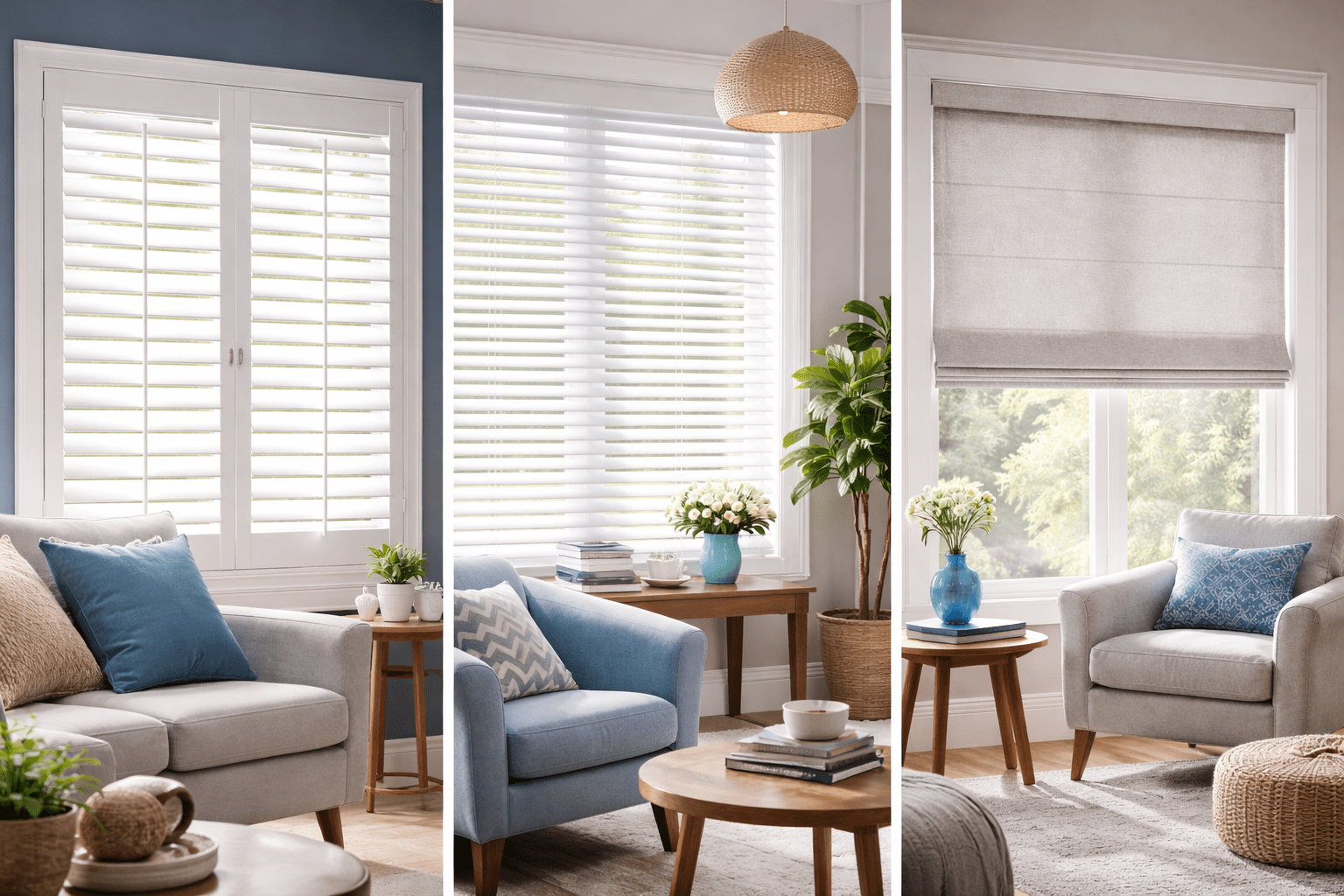
Plantation shutters are solid panels with adjustable louvers that fit directly into your window frame. Once installed, they become a crucial component of the home, much like built-in shelves or cabinetry.
What Makes Plantation Shutters Unique?
Shutters, unlike blinds and shades, cannot be raised or lowered. Instead, you tilt the louvers to regulate light and airflow. This provides privacy while still allowing sunlight in.
They are commonly made from:
- Composite materials (ideal for humid climates)
- Wood (better for dry, climate-controlled spaces)
Benefits of Plantation Shutters Explained Simply
1. Timeless Appearance
Shutters never feel out of date. They complement coastal residences, classic homes, modern farmhouses, and even contemporary interiors.
2. Excellent Light and Privacy Control
You can adjust the louvers to block direct sunlight while still brightening the space.
3. Extremely Durable
High-quality shutters last for decades with minimal upkeep.
4. Low Maintenance
A quick wipe with a cloth is usually all they need.
5. Increased Home Value
Because shutters are permanent, many buyers consider them an upgrade rather than décor.
Who Should Choose Plantation Shutters?
Shutters are ideal if you:
- Plan to stay in your home long-term.
- Want a polished, built-in look.
- Prefer low maintenance
- Live in a warm or humid climate.
- Want consistency throughout the home.
They are extremely popular in primary residences and luxury vacation homes.
When Shutters Might Not Be Ideal
- If you’re on a very tight budget
- If you want frequent style changes
- For very small or unusually shaped windows (unless custom-designed)
Blinds: Flexible, Practical, and Budget-Friendly
Blinds are made up of individual slats that tilt open and closed and can be raised or lowered. They are one of the most well-known window treatments and remain popular for good reason.
Why Blinds Are Still a Top Choice
1. Precise Light Control
Tilting the slats lets you control brightness and privacy easily.
2. Wide Range of Styles and Materials
From faux wood to aluminum, blinds adapt to many spaces.
3. Affordable Options Available
Blinds work well for homeowners who want function without a high upfront cost.
4. Easy Replacement
If one blind is damaged, it’s usually easy to replace.
Best Rooms for Blinds
Blinds work especially well in:
- Home offices
- Guest rooms
- Children’s rooms
- Rental and vacation properties
- Utility spaces
Faux wood blinds are particularly good in humid or sunny areas.
Things to Keep in Mind with Blinds
- Slats can collect dust.
- Corded versions require safety consideration.
- They don’t insulate as well as some shade options.
Shades: Soft, Comfortable, and Highly Versatile
Shades are composed of a single piece of fabric or material that raises and lowers smoothly. They do not have slats, giving them a cleaner and softer appearance.
Why Homeowners Love Shades
1. Softens the Room
Shades create a calm, cozy feel—perfect for living spaces and bedrooms.
2. Many Light-Filtering Options
From sheer to blackout, you can tailor the light exactly how you want.
3. Energy Efficiency
Certain shades, especially cellular shades, help regulate indoor temperature.
4. Ideal for Large or Sunny Windows
Solar and roller shades manage glare without blocking views.
Common Shade Types (Explained Simply)
- Roller Shades: Clean, modern, easy to use
- Solar Shades: Reduce heat and glare while preserving views
- Cellular Shades: Trap air to improve insulation
- Roman Shades: Add softness and decorative appeal
- Woven Shades: Bring texture and a relaxed, coastal feel
Best Rooms for Shades
- Bedrooms
- Living rooms with large windows
- Media rooms
- Vacation homes
- Spaces with strong sunlight
Comparing the Three: Which Is Right for You?
| Feature | Plantation Shutters | Blinds | Shades |
|---|---|---|---|
| Overall Look | Timeless, built-in, architectural | Classic and versatile | Soft, modern, or casual |
| Light Control | Excellent — tilt louvers to adjust light and privacy | Very good — adjustable slats | Varies by fabric (sheer to blackout) |
| Privacy | High — even when louvers are open | High when closed | High with room-darkening or blackout options |
| Energy Efficiency | Very good — helps insulate windows | Moderate | Excellent (especially cellular shades) |
| Durability | Extremely durable, long-lasting | Durable, depends on material | Depends on fabric and use |
| Maintenance | Very low — wipe clean | Low — regular dusting | Low to moderate — vacuum or spot clean |
| Best Rooms | Living rooms, bedrooms, whole-home use | Offices, guest rooms, rentals | Bedrooms, media rooms, large windows |
| Humidity Resistance | Excellent (composite shutters) | Good (faux wood, vinyl) | Good with proper fabric choice |
| Customization Options | Fully custom fit | Many sizes and finishes | Wide variety of colors and styles |
| Child & Pet Safety | Very safe — no cords | Safe with cordless options | Very safe with cordless or motorized |
| Upfront Cost | Higher investment | Most budget-friendly | Mid-range |
| Adds Home Value | Yes — often seen as an upgrade | Minimal | Moderate |
| Ideal For | Homeowners wanting long-term value | Budget-conscious flexibility | Comfort, softness, and energy savings |
This table rapidly demonstrates how shutters, blinds, and shades differ in real-world use, not just appearance.
Mixing Window Treatments Throughout the Home
One of the most common misconceptions is that you must select only one type for the entire house.
In reality, many homeowners mix treatments:
- Plantation shutters in the main living areas
- Shades in bedrooms
- Blinds in offices or guest rooms
This approach balances cost, comfort, and functionality.
Climate and Lifestyle Matter More Than Trends
What works beautifully in one home may not work in another.
If your home experiences:
- Strong sunlight
- High humidity
- Warm temperatures
Then the choice of material is more important than trends. Durable, moisture-resistant choices always surpass purely decorative options.
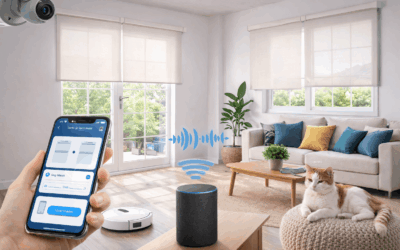
Motorization: Convenience Meets Safety
Motorized window treatments are no longer just a luxury.
They are ideal for:
- Large windows
- Hard-to-reach areas
- Homes with children or pets
- Vacation rentals
- Smart-home integration
Motorization works with blinds, shades, and select shutter designs.
Maintenance: What Real Life Looks Like
- Shutters: Occasional wipe-down
- Blinds: Dusting and occasional deeper cleaning
- Shades: Vacuum or spot-clean depending on fabric
Shutters and faux wood blinds are the most low-maintenance option.
Budget: Thinking Beyond Initial Cost
- Blinds are the most affordable upfront
- Shades offer mid-range flexibility
- Plantation shutters cost more initially but last longer
Consider window treatments both a comfort feature and an investment.
Final Thoughts: Choosing What Fits Your Home and Life
There is no universal “best” window treatment—only what works best for you.
The right choice depends on:
- How each room is used
- Your comfort needs
- Your climate
- Your long-term plans
- Your budget
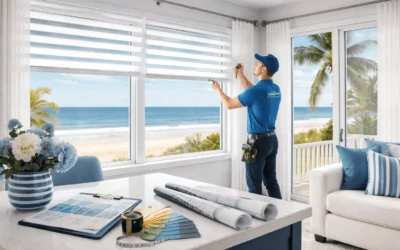
Many homeowners benefit most from professional guidance, especially when choosing materials that must perform well in real-world conditions.
A Homeowner’s Guide to Choosing the Right Window Treatments: Offers a broader perspective on selecting window treatments, complementing the comparative analysis.