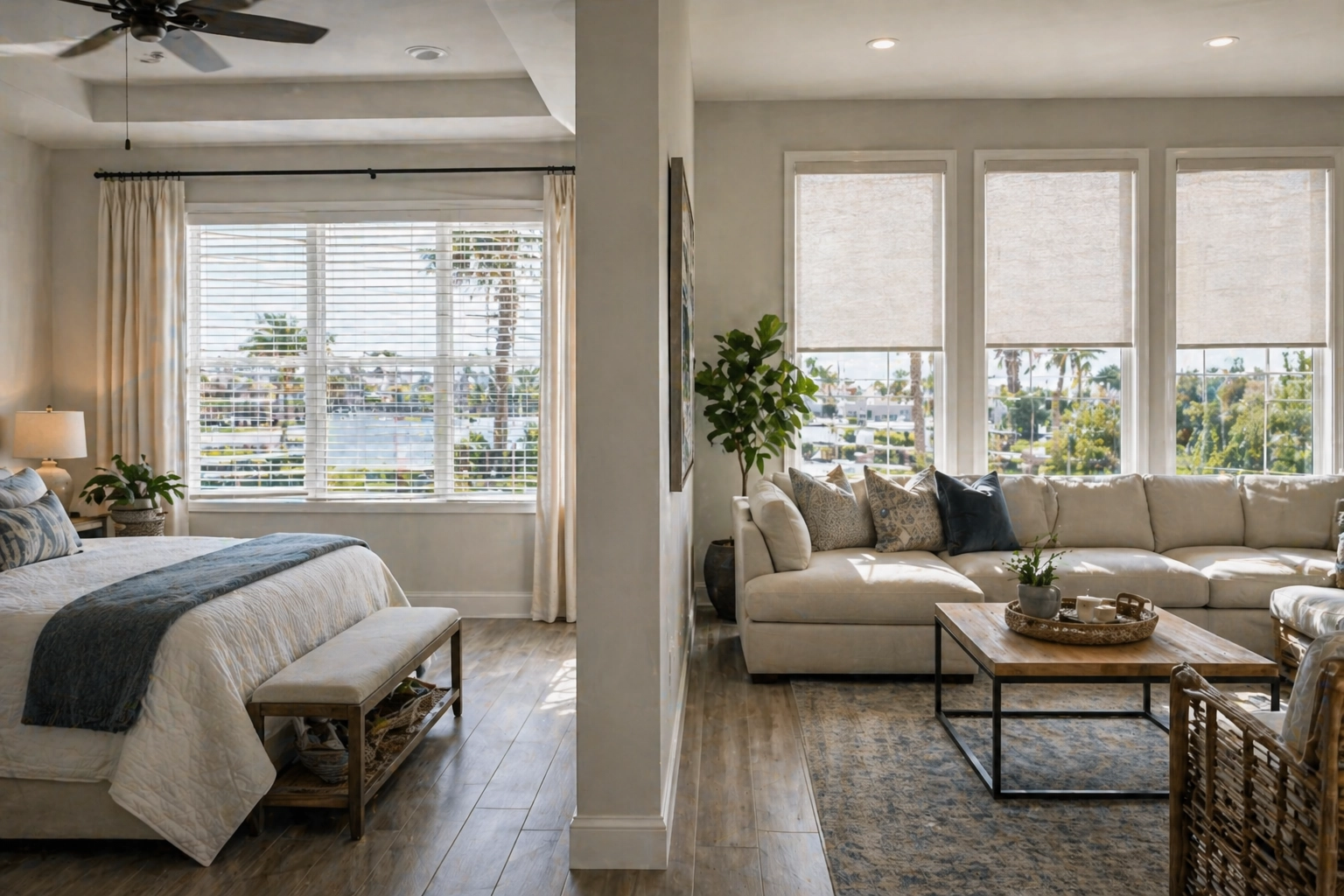
Choosing Between Blinds and Shades Made Simple
When it comes to choosing the correct window treatments, one question arises repeatedly: blinds vs. shades, which one is the better option?
At first glance, they might seem similar. Both cover your windows, provide privacy, and aid in light control. But when you look closely, the differences become clear, and these differences are important for designing a comfortable, functional home.
The truth is that there is no single “best” solution for each space. The best option depends on how each space is used, how much light it gets, and the atmosphere you want to create.
Understanding how blinds and shades work and where each one shines allows you to select window treatments that feel just right in every part of your home.
Understanding the Difference: Blinds vs. Shades
Before deciding what works best in each space, it’s helpful to grasp the differences between blinds and shades.
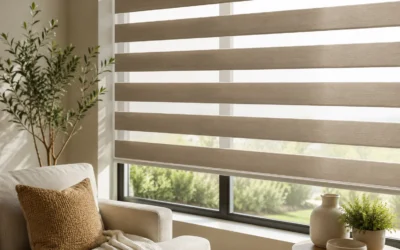
Blinds are made of slats, usually horizontal or vertical, that can be tilted open or closed. This allows you to have flexible control over light and privacy without fully raising the covering.
Shades, on the other hand, are made from a single piece of fabric. Instead of tilting, they are raised or lowered to manage the amount of light entering the room.
This simple difference shapes how each option functions.
Living Room: Balancing Light and Style
The living room is frequently one of the brightest and most used rooms in a home. It’s where natural light is welcome, but not when it’s too bright or uncomfortable.
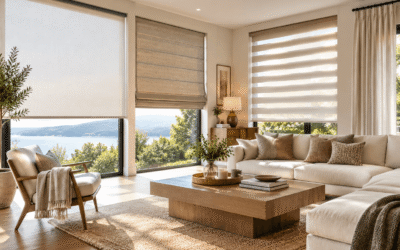
Blinds and shades can both function well in this space, depending on the desired atmosphere.
Blinds are perfect for those seeking flexibility. Tilting the slats reduces glare while still allowing light in, which is especially effective during the day.
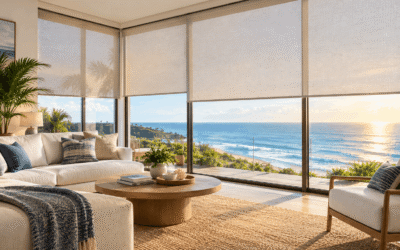
Shades, particularly those that filter light, help to create a softer and more comfortable ambiance. They beautifully diffuse sunlight, creating a relaxing and pleasant atmosphere in the room.
If your living room gets a lot of direct sunlight, layered window treatments (shades and curtains) can provide you with the best of both worlds.
Bedroom: Privacy and Comfort Come First
Bedrooms are all about rest, light control, and privacy, which are crucial.
When comparing blinds and shades for bedrooms, shades often come out ahead, particularly blackout or room-darkening options. They block light more efficiently, resulting in a darker environment that supports better sleep.
Blinds can still work, but they may let small gaps of light through the slats. For some people, this is not a problem. Others find it distracting, particularly in the early morning.
If you like the look of blinds but need better light control, pairing them with curtains is a practical solution.
Kitchen: Practicality Matters Most
Kitchens are high-traffic areas where durability and ease of cleaning are just as important as appearance.
Blinds frequently outperform in this situation.
Their slatted design makes them easy to clean, which is beneficial in a space that is exposed to cooking residue, moisture, and frequent use.
Shades can still be used in kitchens, especially if you choose moisture-resistant materials. However, fabric blinds may require more maintenance in the long run.
When choosing window treatments for the kitchen, consider how frequently they will need to be cleaned as well as their exposure to heat and humidity.
Bathroom: Moisture and Privacy Combined
Bathrooms must strike a precise balance between privacy and moisture resistance.
Blinds made of PVC or aluminum are a reliable option here. They handle humidity well and are less prone to warping or mildew growth.
Shades can be used, but only if they are specifically built for moisture-prone areas. Otherwise, they may not stand up to the test of time.
When it comes to blinds vs. shades, blinds are typically the more practical solution for bathrooms, particularly in spaces with limited ventilation.
Kids’ Room: Safety and Simplicity
Safety is a top priority in children’s rooms.
Cordless shades are often the preferred option since they avoid potential risks while still providing good light control.
They also give the space a softer, more comfortable look that suits a child-friendly space.
Blinds can also be used, but they should be modern and child-safe, with no exposed cords.
When choosing window treatments for a children’s room, simplicity and safety should be your primary considerations.
Home Office: Managing Light and Glare
A home office requires steady, comfortable lighting, especially if you work long hours in front of a screen.
Blinds are especially handy in this situation since they allow you to control the angle of light throughout the day. This reduces glare without darkening the entire room.
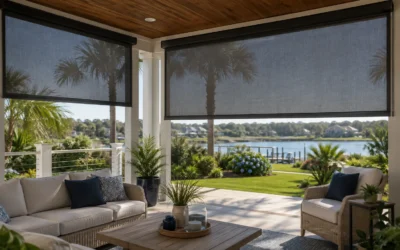
Shades, particularly solar shades, are also an excellent choice. They reduce brightness without sacrificing visibility, making them excellent for daytime use.
When deciding between blinds and shades in a workspace, the goal is to create a balanced environment that supports focus and productivity.
Large Windows and Open Spaces
For large windows or open-plan areas, the choice is frequently based on both function and visual impact.
Blinds can provide flexibility, particularly for large windows where light control must be adjusted frequently.
Shades, on the other hand, provide a cleaner and more seamless appearance, which is very useful in modern homes. They create a smooth, uninterrupted look that enhances the sense of space.
In many cases, homeowners use a combination of the two to suit different parts of the same area.
Energy Efficiency and Comfort
Both blinds and shades can contribute to a more comfortable indoor environment, although they do so in slightly different ways.
Shades typically provide higher insulation due to their continuous fabric design. They help to prevent heat gain and keep rooms cool, particularly in sun-exposed locations.
Blinds, while slightly less insulating, can still control light and reduce direct heat when correctly adjusted.
When choosing between blinds vs. shades, consider how much temperature control matters in each room.
Finding the Right Fit for Your Home
There is no one-size-fits-all solution when it comes to blinds vs. shades.
Every space has its own purpose, lighting, and design requirements. The ideal strategy is to consider your window treatments as part of the overall design of the space.
Some rooms benefit from the flexibility of blinds. Others feel better with softer colors. In many homes, a thoughtful combination of the two produces the most balanced outcome.
Final Thoughts: Making the Right Choice
Choosing between blinds and shades does not have to be complicated.
When you understand how each option works and where it performs best, making the right choice becomes a lot easier.
By choosing the correct window treatments for each room, you improve not only the appearance of your home but also how it feels and functions on a daily basis.
Still unsure whether blinds or shades are the right fit for your home?
At Beach Blinds, we help you find the perfect balance between style, comfort, and functionality tailored to each room in your space. From expert advice to precise installation, every detail is handled with care.
Get in touch with Beach Blinds today and discover window treatments designed to suit your home beautifully.